A Case for E-bike Incentives Programs
- Author: Tyler Madell
- Date: January 10, 2025
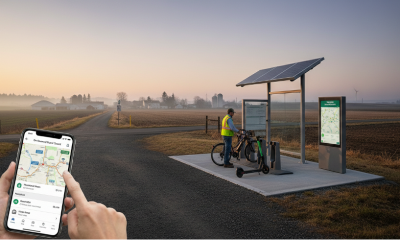
With the numerous benefits that widespread e-bike adoption could bring to New York State, a state-wide e-bike incentive program would…
Small transit systems in rural areas and small towns across the U.S. are implementing creative solutions to address mobility challenges.…
Part 1: Why e-bikes? What if I told you that there was a low-cost transportation policy measure that New York…
Reliable transportation is essential for workforce participation, yet it remains a significant barrier to employment across many regions of the…
So often our discussion of public transit is from an adult perspective: How can more public transit impact the rate…
Imagine going to a doctor and getting a prescription for transportation insecurity. Thanks to the work of the Gravity Project,…
Residents in Lincoln Co., Idaho are predominantly farmers and ranchers, with a population of just over 5,000 and under 2,000…
Access to fresh, nutritious food remains a significant challenge for many communities across the United States, particularly in rural areas…
It’s past time we acknowledge that non-drivers exist, not just in big cities but everywhere. Even in rural America, we make up nearly a third, if not more, of the population. We need to make it possible for people who can’t drive or can’t afford to drive to live, and even thrive in all our communities.
There are many things that need to happen when natural disasters hit, from evacuation to emergency responses, to relief efforts.…
Access to healthcare is essential for everyone, but it is particularly important for children’s growth and development. Healthcare access improves…
As of May, the average rent for an apartment in San Jose is $2,526 per month — 67% higher than the national average. The average cost to buy a home? Almost $1.5 million.
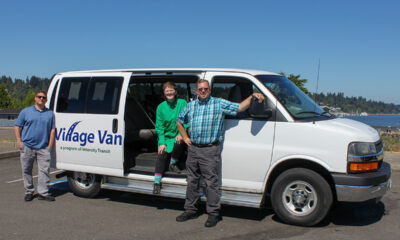
Funded by federal and state grants and operating in partnership with local social and public service agencies, Village Vans is an important community asset…
As we move forward with providing support to you, we will prepare for the next change. It is my plan to continue the work and legacy that Amy has built at NCMM.
It may be surprising to find out how many veterans spend their lives on the verge of homelessness nationwide. Despite…
RICHMOND — The Virginia Department of Rail and Public Transportation (DRPT) today announced that its new Virginia Trip Planner is…
In one Oklahoma region, they’re using high impact, low-cost, proven interventions to start making roads safer for everyone.
“The success of the program lies in its ability to tailor transportation services to meet the unique needs of each individual. With staff expertise and lived experience, we ensure empathy and understanding are at the forefront of every trip, fostering trust and rapport among our riders.”
A RAISE grant recently awarded to Kenosha, WI is going to be used to create bike trails in a former railroad corridor.
Potomac Valley Transit Authority (PVTA) is using a $4.57 million RAISE grant to begin a shift from carbon to hydrogen fuel cell powered transit vehicles.
As COVID grants are ending, communities may be looking for alternative sources to fund multimodal transit projects.
California’s capital city has grown by more than 10% in the past decade. As its population has expanded, a series of area agencies began meeting monthly to understand their shared goals.
The Pandemic hit mass transit hard. From fears of getting sick on public transportation to the rise of remote work, most metro areas are still not back up to the ridership they had in the Before Times. Some transit agencies are experimenting with gamification to lure riders back.
In September 2023, the Transit Workforce Center unveiled research on various childcare support models within the transit industry, underscoring a critical link between childcare support and workforce availability.
Kayla, a native of Cambridge, Massachusetts, has cultivated a profound passion for serving communities since her upbringing in the vibrant…
In North San Diego County, the City of Vista is using a Federal Transit Administration (FTA) Areas of Persistent Poverty (AoPP) grant to make its largest multimodal center more easily accessible for pedestrians and cyclists.
Utah’s Transportation Technology Group researches and implements emerging technology to provide safety information to drivers, vehicles, and control room operators. Their goal is to make transportation safer while improving mobility options and reliability for all users.
Recent court cases in Chicago and New York ordered those cities to install accessible pedestrian signal (APS) devices. These devices are posted at pedestrian crossings, with buttons that activate verbal prompts for blind and visually impaired persons to know when it is safe to cross.
Before the Americans with Disabilities Act (ADA) was passed in 1990, approximately 65% of public buses in the US were accessible. By 2020, 97% of buses were ADA accessible. But many fixed route transit systems still have inaccessible infrastructure that was grandfathered in when the ADA became law. Funding from the Bipartisan Infrastructure Law is designed to help make transit more equitable.
While regional and commuter rail lines in this New England state help spur economic growth, first and last mile transit remains an obstacle. But Norwalk’s WHEELS2U micro transit program was so successful that the state is expanding localized shared van programs.
Paris, a small city in Northeast Texas is connecting its residents through public mobility services. Supported by the community, this service is providing much needed access to healthcare, grocery shopping and socialization. Federal transportation funding in the United States is primarily allocated 80% for highways, 20% for public transit. In rural areas like Paris’s Lamar County, which has a population density of 55 people per square mile, this has led to a lack of mobility options for residents who don’t have access to a car.
Early childhood nonprofits in Lincoln and Omaha, NE, knew that families didn’t have enough affordable childcare. But until they ran the data, they didn’t realize that such a large part of the problem was accessing that childcare.
The community’s transit authority partnered with the Red Cross, a local First Nations and other organizations and recruited volunteers to drive handicapped accessible vehicles.
Hillsborough County, FL is making fresh and healthy food more accessible to residents in East Tampa. Following a successful pilot, the program is now a regular public service.
When a college student’s grandfather moved to Maryland to be closer to family, she noticed that he often sat at…

In Nashville, TN, Neighborhood Health, a nonprofit organization that serves patients regardless of their ability to pay, partners with the city’s transit organization to get people to appointments.
Public transportation, along with many other professions, is experiencing a shortage of qualified workers. According to a recent study published…
This job means a lot to me. It’s more than a job: This saves lives. It doesn’t matter how hard the day is, I’m proud of what we do.
In Will County, IL, a Chicago exurb, Census tract surveys found that transit was a major barrier for women to get to their annual wellness visits. The Will County Health Department (WCHD) partnered with Pace Suburban Bus, a local transit agency, to connect women with bus vouchers to access necessary preventative care.
As we shift from summer into fall, I have compiled the most striking posts from the past few months. Organizations are using HHS grants for transit, making new partners, and trying new models to best support their communities.
After years of high asthma rates and chronically toxic air, Antelope Valley, CA electrified their entire bus fleet, the first in North America to do so.
In May, Germany announced that it was making its €49 monthly national train pass permanent. But with rising inflation and lower salaries, average Germans complain that even this is too much, and the program’s future is uncertain.
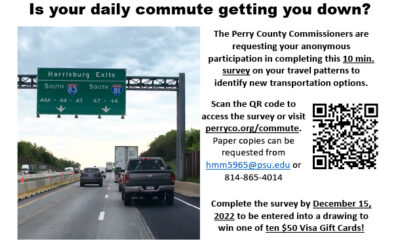
Rural Perry County is home to workers who routinely commute to Mechanicsburg, a 30 min. drive away. But public transit options are limited. Researchers at Penn State University collaborated with local government officials to design solutions.
Local government officials and human services staff identified at-risk populations in their communities who faced food insecurity and transportation difficulties.…
The massive $1.2 trillion Infrastructure Investment and Jobs Act included discretionary grants for communities to fund projects that are more…
Hopelink and King County, WA Metro are teaming up to teach newly housed residents of the county’s 1,600 new affordable…
OMAHA, NEBRASKA – A new video series called “Faces of Transit in Nebraska” celebrates the good work of transit agencies…
As technology advances and a focus on environmental sustainability grows, e-bikes have emerged as a convenient and eco-friendly mobility solution.…
New Growth Transit (NGT) is an unusual transit program because it began operations with a grant from a Health and…
In Fort Smith, AR, the University of Arkansas’s Civil Engineering Department partnered with the municipality to create a bikeshare program…
Judges in Western Indiana counties often see transportation access as a barrier to justice-involved individuals facing addiction. They partnered with…
In NW PA, the Crawford Area Transportation Authority (CATA) has been working with Pennsylvania state transportation agency PennDot to develop…
The shift toward greener, healthier, and more economical means of transportation has led to a surge in the popularity of…
Low ridership on fixed route buses. Lots of taxis waiting around. Communities in need of transit. The Socially Aware Mobility…
In Athens, OH, the local library system used a Creating Healthy Communities grant to launch their book-a-bike program. Athens, Ohio,…
In rural Arkansas, county coordinators support families in crisis to help connect them with necessary services. Transit is a key…
When Glen retired as an educator from a small rural middle school, he knew that volunteering and service were in…
In 2015, social worker Kim Garrett worked at the victim’s services unit at the Oklahoma City Police Department. After seeing…
In 2019, Stark County’s SARTA system was awarded an Integrated Mobility Innovation (IMI) grant to make public transit more accessible to all riders. Successful partnerships and communication led to more equitable mobility programs.
The Mississippi Department of Transportation (MDOT) partnered with the Mississippi Home Corporation (MHC) to provide driver training and employment for unhoused people. The success of the program has been life changing for Mississippians experiencing homelessness, while helping transit providers solve critical driver shortages.
Have more mobility news that we should be reading and sharing? Let us know! Reach out to us (info@ccam-tac.org).
Please confirm you want to block this member.
You will no longer be able to:
Please note: This action will also remove this member from your connections and send a report to the site admin. Please allow a few minutes for this process to complete.